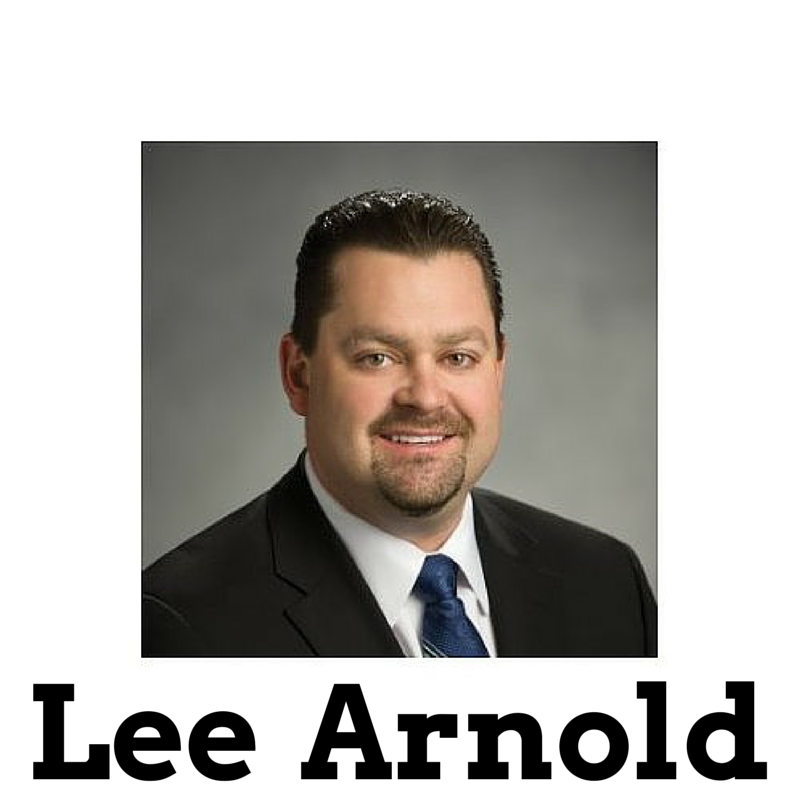
Lee Arnold is an international speaker, trainer, and licensed broker who has had over 13 years of experience in the real estate investment market. Lee helps connects private investors to borrowers all across the United States as well as Canada. He comes on the AIPIS show today to talk about note investing. He shares some important tips and insights on the subject along with some other very important investment tips any investor could use.
Key Takeaways:
2:40 – How can you be good at note investing? Lee explains in this segment.
6:40 – Before you buy a note, ask the lender if they provided the home owner with all of the compliance regulations.
8:10 – Disclaimer: keep in mind everything Lee says is just his opinion and you should personally variety what he says.
9:50 – Always do background checks from everybody you’re buying from. Who is the home owner? Who signed for the loan? Etc.
13:30 – When working with Lee’s company, the serving fees and all closing fees are paid by the burrower. The only fees investors or buyers will have to pay are the transfer fees.
15:30 – The average property loan is $56k. Lee says for that type of loan to happen, the property needs to be worth $85k-$90k on the acquisition, which is roughly a 65% of the value.
20:20 – Lee has personally done discounted paper, but it’s not really what they specialize in.
23:45 – Minimum investment is $50k and an investor would need to provide a letter from their tax adviser or CPA.
Mentioned In This Episode:
Transcript:
Jason Hartman:
Welcome to the AIPIS Show for Accredited Income Property Investment Specialists and those who desire to be. This is your host, Jason Hartman, where we talk about increasing your income, your productivity, and just generally having a better life while serving your clients better with America’s most historically-proven asset class, income property. We have a great interview for you today and we will be back with that in less than 60 seconds.
Announcer:
What’s great about the shows you’ll find on JasonHartman.com is that if you want to learn how to finance your next big real estate deal, there’s a show for that. If you want to learn more about food storage and the best way to keep those onions from smelling up everything else, there’s a show for that. If you honestly want to know more about business ethics, there’s a show for that and if you just want to get away from it all and need to know something about world travel, there’s even a show for that. Yep, there’s a show for just about anything only from JasonHartman.com or type in Jason Hartman in the iTunes store.
Jason:
It’s my pleasure to welcome Lee Arnold to the show. He is SEO and chairman of the board of the Secured Investment Group and he deals with notes, REO properties, and different parts of the real estate business like that. Lee, welcome, are you coming to us from Coeur D Alene?
Lee Arnold:
I am, Jason. Thanks for having me here.
Jason:
Beautiful place. It’s good to have you. So,I want to talk mostly, if we can, about note investing today and your company is a note brokerage. You offer individual note investment. One note, one investor. Not co-mingling the funds or anything like that. What are some of the things that people can do to be good at note investing?
Lee:
Well, you know, the end result of a bad note deal is you own property. So, you go from being a passive note investor to being an active landlord or property manager or property rehaber.
Jason:
Well, occasionally that’s the goal. Isn’t it? Loan to own?
Lee:
Yeah, for some people it is. Our company is not interested necessarily in the real estate side. We’d much rather lend money and have people send us a check every month. That’s really more our model, but unfortunately that doesn’t always end up being the end result, so in that instance now we’ve gotta go through and we gotta foreclose the asset and we gotta take back management of it, and we gotta clean it up and sell it or we gotta liquidate or another strategy I’m sure many of your listeners are familiar with and are interested in doing is buying the note either at a preforming status or a defaulted status. Many people are familiar with discounted note buying to increase yield, but it all comes back to the value of real estate.
Now, in today’s market, one of the hurdles and pitfalls people absolutely must be cautious of is if that loan was originally underwritten. We are seeing a lot of people who are buying notes that originated in 2007, 2008, 2009 and this is pre-alternation of the Frank Dodd act in 2010, so a lot of the loans pre-2010 are not in compliance in the present years, so you gotta be real careful that whoever originated that note crossed the Ts and dotted the I, because if they didn’t and you buy that paper, you are now subjected to the terms of the contract that was agreed to originally.
Jason:
Okay, that’s a really good point you make. So Dodd Frank came along and when was it revised so investors can watch out.
Lee:
2010.
Jason:
So, if they bought..probably what month..do you know what month?
Lee:
I wanna say 3rd quarter in 2010.
Jason:
Okay, so, if you buy a note that was originated for that, what can happen to you as the investor?
Lee:
Well, prior to that there wasn’t a lot of stipulation for real estate investors, like much of your audience, to buy property, fix it up, and then sell it and carry back paper on behalf of the owner occupant. However, with the mortgage the meltdown, it became about regulations Reg Z and RESPA and making sure you’re checking all the boxes that you are providing proper disclosures to the buyer within three days of the contract. You know, all of the now new rules that every mortgage lender in the land is subject to follow. For loan written pre-2010 by an investor to another occupant, what we’re finding is those loans are not written in compliance with today’s market.
So, if it were me and somebody was approaching me with a pre-2010 loan, what I would require before I would work to buy it is that note either be modified or refinanced by that individual under the post-2010 guidelines, so that I can be assured that loan is in compliance when I acquire it.
Jason:
Okay, so, how would an investor be sure that that’s really happened?
Lee:
You know, if you are familiar with the loan document process, when you buy a note, you’re going to be handed essentially the entire loan file and many private investors and that’s really where a lot of investors are going to from a note acquisition play is direct to the private investor who sold a home on contract and carried paper. That’s typically where most people are going. When you go and buy that note, you have the right to inspect the entire loan file and the thing that you need to be looking for is the underwriting guidelines that were followed and/or adhered to by that particular lender when they wrote the paper initially.
So, when you’re going in there asked to see, hey, did you provide the home owner, the buyer of this property, with all of the compliance regulations? Did you follow Reg Z? Did you follow RESPA? Which are all now required documents for owner documents. Now, the state of California has mandated that any investor that is doing more than 5 owner occupied seller carried-back contracts that they be a leased MLO, that’s your Mortgage Loaner Origination/Designation.
If you are an investor in California doing more than 5 of those a year, you now have to get your Mortgage Loaner Origination/Designation and you’ve got to follow all of Reg Z and the rest of the requirements.
Jason:
It’s always my home state, the socialist republic of California, it’s always California that’s got some damn special set of laws that just inhibit business and make everything harder. Does that apply to a California note or a California resident doing the deal or both?
Lee:
It’s really mandated by a Californian note. Now, Jason, this will drive you nuts, but I’m doing it anyway, I’m not an attorney or CPA or financial adviser so everything that I’m saying is my opinion and people should verify what I’m saying to actually be factual, that said, my understanding and interpretation is that loans being originated in the state of California. If you are a California resident originating loans in another state, then that state laws will mandate the requirements.
Now, you mentioned the socialist republic of California, I’ve heard it said that all the good ideas start in California and they’re illegal by the time they get to Florida.
Jason:
I love that! It’s great.
Lee:
So, for everybody that is listening. If they’re not in California, they need to understand that legislation is going to continue to make its way east, because most states are adopting this rule change to protect homeowners. So the onesie, twosie, investor beware if you’re originating paper more than 5, you should absolutely check your state guidelines for licensing requirements.
Jason:
Okay, but we’re mostly talking not about origination, we’re mostly talking about trading notes that have already been originated by somebody else. So, that was good advise on the Dodd Frank issue. What else? I mean, this is such, you know, before we even move on to what else. Even though you do all that stuff that you mentioned, which is great advise, still how do you know it really happened? How do you know it’s really true? You really got to have a trusted source that you’re buying from, right?
Lee:
Yeah, it’s really important that you not only verify the information and note that you’re looking to acquire, but you also do background checks from the parties that you’re buying from. So, who is the home owner? Who is signed on the dotted line for that loan? Is there a credit document in the loan pile itself? I would encourage anybody buying paper, as long as the note seller allows it, is okay with it, is for you to contact the borrower and say, hey, how was your experience in getting this loan? Are you disgruntled in anyway?
Now, if you’re buying the faulted paper, what you need to look at here are the loan docs written in compliance with the state guidelines. So, did that investor adhered to the usury laws for owner occupancy in that state or did they bailate usury laws. Second to that, you really gotta do a strong determination of values, you know, if you’re buying a note that was originated for 120 in 2007 and they’re trying to sell you that same paper at 110 today, you may find through a simple value search on Zillow or Truila or any free valuation site that property is now worth 60.
So, you gotta make sure that you’re basing the price of your paper acquisition on the actual value of the real estate.
Jason:
What are your most popular states that you do business in and what is your average deal size? When I say deal size I’m referring to the purchase price of the note, not the face value or the unpaid balance otherwise known as UPB or anything else. Just the amount invested to buy the note.
Lee:
Well, I’ll tell you, Jason. We’re not actually buying the note, we are the originator of the note. So, we’re the company that is writing paper for real estate investors for the acquisition of real property. Most of our clientele are buying that property to fix, flip it, and sell it and make a profit. So our loans typically range from 12 to 24 months, but then we turn around and sell that note and we sell it at par. So, we’re not discounting it at all because we are transferring a yield to the investor.
If I write the paper at 12 or 13, I’m selling it to an investor at 9 or 10. So, they’re giving a nice note and the reason it’s well secured for them is we only pay or we only originate it at 65% of the purchased price of the apprised value, which ever is lower. So, when you buy our paper at par, you are buying that note at 65% as is, today, value. So, there’s no wishy washy guest work as to where is value today, because all of our paper comes with a full blown appraisal, less than 90 days old.
Jason:
So, when you originate that note, your profit is probably keeping the points in the deal, right?
Lee:
I’m keeping the points and we’re also keeping a portion of the coupon and we’re maintaining the servicing, so the reason a lot of investors that are looking for a passive investors buy paper from us directly is because we’re staying in the deal with them as well. So, if I write a note for a 100,000 and let’s say, Jason, you buy it for a 100 grand, if I wrote the note at 13, and I’m giving you 10, that means I’m still getting 3. but I only collect my 3 if that borrower continues to make their payment and I’m going to continue to service the loan so I make sure I get paid and if I’m getting paid, you can rest assured you’re getting paid.
Jason:
So, Lee, is that typically scenario that you are loaning those? Those are a hard money loan, maybe for a rehaber at 13, you’re keeping 3 and the investor is getting 10? That’s the typical deal.
Lee:
Yeah.
Jason:
Yeah, okay, that model is a very common model around and it’s great if you want just a passive deal and are there any other fees that you’re taking off the top like serving or do you absorb that in the deal?
Lee:
No, the serving fees are actually paid for by the borrower. In fact, all closing fees are paid for by the borrower. The only fees that anybody buying paper from us are going to pay are the transfer fees, which range anywhere from $52-230
Jason:
Okay, so, average deal size?
Lee:
Right now our average deal size is $56,000.
Jason:
Okay, $56,000. Most popular states? That’ll be where the property is located, of course.
Lee:
Mid-western states and south eastern states from our company is by far the most popular. Simply because the price points of that real estate is lower and more investors can enter those markets with less cash, which is why we’re seeing so much activity in those regions versus being in Southern California where the average flip deal is going put you out $380 grand. You can actually get into properties in the mid west for $38,000. We’ve got some people buying houses at tax auctions for $500 bucks. So, because of those price points and what’s gone on in those markets, we’re seeing very, very low price points and a lot of activity.
Jason:
So, your customer, your burrower, is it always a rehaber where they’re just doing rehab fix and flip stuff?
Lee:
It’s always a real estate investor. We actually do not do any loans to owner occupants simply to avoid the Frank Dodd, Reg Z, and RESPA.
Jason:
Yeah, when Dodd Frank gets involved. That just get limits financing options for burrowers, so good job government.
Lee:
Yeah and what Frank Dodd did was they essentially eliminated every independent broker on the plant and moved it all internal in the bank. So, if banks wanna play in the owner occupied low-interest rate mortgage space, great, I’m going to let them keep that side of the business. I don’t want to deal with the regulation.
Jason:
Yeah, it’s very understandable. Okay, good. Tell us about the rest of your business…oh, before we go on to that, I want to ask you one more question. You said the average loan amount was $56,000, how are you underwriting. Talk a little bit about underwriting that deal. So, for example, what does that property need to be worth for you to loan that average of $56,000? What’s that LTV on the acquisition value and then the after repair, ARV, value on that deal?
Lee:
It’s $56,000 I’m going to be sitting at 65% of the value, which I did run the numbers previously to this, Jason, but it’s going to put it somewhere on the $85,000-$90,000 on an acquisition.
Jason:
Okay, so, it’s going to be 65% of the acquisition price?
Lee:
Correct. So, the borrower is either going to come to the closing table with their own cash, which we prefer because it puts skin in the game, which reduces our risk and the end-lender’s risk or they can have the seller pay back subordinate second to our first. We always have to be in first position.
Jason:
Gosh, okay. Do you even care about the ARV? Do you even consider that?
Lee:
Yeah, we do consider ARV, because, again, if that bar isn’t paid that property because our responsibility. So, we wanna know what is the expensive to be incurred to bring it up to snuff and once we do, what is that end value? So on an 85-90 acquisition, we wanna see ARV value in the 140 to 160 range based on a 90 acquisition today.
Jason:
So, I mean, those are pretty secure loans. You’re not offering a very higher LTV, I mean, 65% LTV on the buy for a 13%, you know, a loan to a rehaber is..I mean, they can get better deals than that. They can get more liberal lenders, but your investors probably love it. My question is do you have enough deal flow, do you have enough rehabers that want to borrow like that? They don’t go out and get better terms? I’m kind of surprised.
Lee:
You know, that’s what’s interesting. We have more deal flow than typically we can absorb, because there are many companies raising up now that are coming in and are doing second position on the ARV rehab sides and we’re seeing a lot of local lenders that want to come along side our first and be in the second position because they are boots on ground. I mean, their house is across the street from them, so they’re much more apt to take that riskier position.
Now, for some of our more better borrowers, we certainly have more aggressive guidelines, which allow us to do some higher LTV and we even have some properties and investors that we do do ARV lending for, but not until we’ve established a relationship with that individual and we got a working relationship to know what kind of work they do. Do they make their payments on time? Do they do good work? We are a relationship lender. We’re not trying to be the highest LTV lender or the lower rate lender that’s not what we do. We wanna work with good investors, give them good, fair rates, and allow them to get in and out of a lot of properties.
Jason:
Good stuff. Lee, the terms are 24 months? That’s pretty long for a rehaber, really.
Lee:
Our average loan is 12 months. For those that think they can pay it off sooner, that’s fine. We actually don’t write in a pre-payment penalty and airbar loans. So, if you wanna pay it off in three days, you can do it, but I’ve been a real estate investor a long time myself and you know the adage, if something can go wrong, it will go wrong, and the minute you tear down that wall, you’re going to identify another $5,000 in problems that you didn’t know where there.
So, we don’t want to write loans that are specifically going to get that investor in trouble. We don’t want to foreclose, we don’t want the property back. We want them to have a great experience, we want them to make a profit, and we want them to come back and borrow again and again and again.
So, the last thing we wanna do is foreclose, so we’re going to write paper that is comfortable for the investor. We will modify and give extensions is if that’s what is needed to help them get the project completed and we will refinance at the 2 years for another 2 year term if they wanna hold as a rental. So, we are the investors lender, because as the CEO I cut my teeth in this business by buying, fixing, and flipping real estate, so we know what exactly the investor is looking for and we try and be as accommodating to those needs as we can.
Jason:
In those deals, are they just interest only balloon at the end or do you require payments in term?
Lee:
We do require payments, but the payments are only interest, so there are no principle by down of any time during the duration of the loan.
Jason:
So, just monthly interest payments?
Lee:
You got it.
Jason:
Good stuff. You don’t deal in the discounted notes side then, huh?
Lee:
You know, we have..I have acquired discounted paper, I’ve sold discounted paper, but it’s not our space per say. There are several other great sites out there that offer the discounted note buying stuff. It’s not something we specialize in though.
Jason:
I’m just kind of curious. Is there a reason you’ve shyed away from that business? I mean, I know you’ve dabbled in it, it sounds like, but you don’t do it as a business. It’s not what your company is focus is. I’m kinda curious.
Lee:
I wouldn’t say we’ve shyed away from it, but because of my background as a real estate investor, I’ve actually found more value in recovering the asset and either re-selling it to another rehaber and writing new paper for our origination or taking it back, fixing it up, and selling it at retail price.
So, my experience with a lot of people that are discounting notes and trying to loan them is because they don’t have the infrastructure that is necessary to succeed in defaulting paper. It really is a specialized skill set and if you don’t have the capital backing you to absorb the cost of foreclosure, the cost of eviction.
You know, I’ve had legal fees in the $100,000 range on some foreclosures in some judicial markets, so our experience has been that most people that are taking these steep, steep discounts is because they rather take a loss now and cash and let somebody else take the ride then do it themselves. Our experience has been we rather take the ride.
Jason:
So, Lee, how do you decide? You say that you sell loans off one by one to investors, but then you also offer funds. How do you decide, which goes where and how does an investor decide which way to invest in your company?
Lee:
Well, we have to have two private equity funds. These are Reg C funds. 5 or 6 C funds, general solicitation that we use essentially as our funding line. Others would refer to it as a warehouse line where we actually originate the paper, we fund those loans internally with our high yield, which is made up of with accredited investors.
Those loans then funded create the inventory that we now sell to one off investors, many of whom are buying these notes that are sub-contracted IRAs or other accounts, because these are annuity type of income for the retirees that are looking for a more passive play that are well secured. It’s kind of a one-stop-shop, we do everything.
There’s nothing we hold internally not for sale, so every loan we originate we actually put it on our website. People can go there and see what notes are available and then they can let us know that they wanna buy this note or that note. Some buy one, some buy two, some buy 5.
And because our minimum loan is only $15,000 and we do a lot of business in the midwest we have loans in the $15,000 and $30,000 range. So for those that are full time employees, they maybe just recently ROTH or a 401k, so there’s not a lot of money in it, it’s a great way for them to get involved in the note buying space without having hundreds of thousands of dollars.
Jason:
And when they do the fund, what’s the minimum there? Probably $25,000?
Lee:
Minimum investment is the fund is $50,000 and they would need to meet criteria for an accredited investor, we would need a latter because of general solicitation, we would need a letter from their CPA or their tax adviser or tax return showing that they meet the qualifications.
Jason:
Yeah, accredited investors only for that. Good stuff. Well, Lee, give out your website, tell people where they can learn more.
Lee:
Check me out at www.securedinvestmentcorp.com/. If you’re interested in buying any of our notes you can just simply go to loan or deals. Our deals site there you will see both notes that are up for sale as well as REO properties that we have foreclosed that we are now re-selling. That is a www.securedinvestmentcorp.com/ and if you are real estate investor that needs to borrow money and would like us to look at your file and possibly getting you some acquisition cash or even some cash we fiance if you own property check us out at www.cogocapital.com/.
Jason:
Good stuff. Lee Arnold thank you so much for joining us today.
Lee:
Thank you, Jason. I appreciate it.