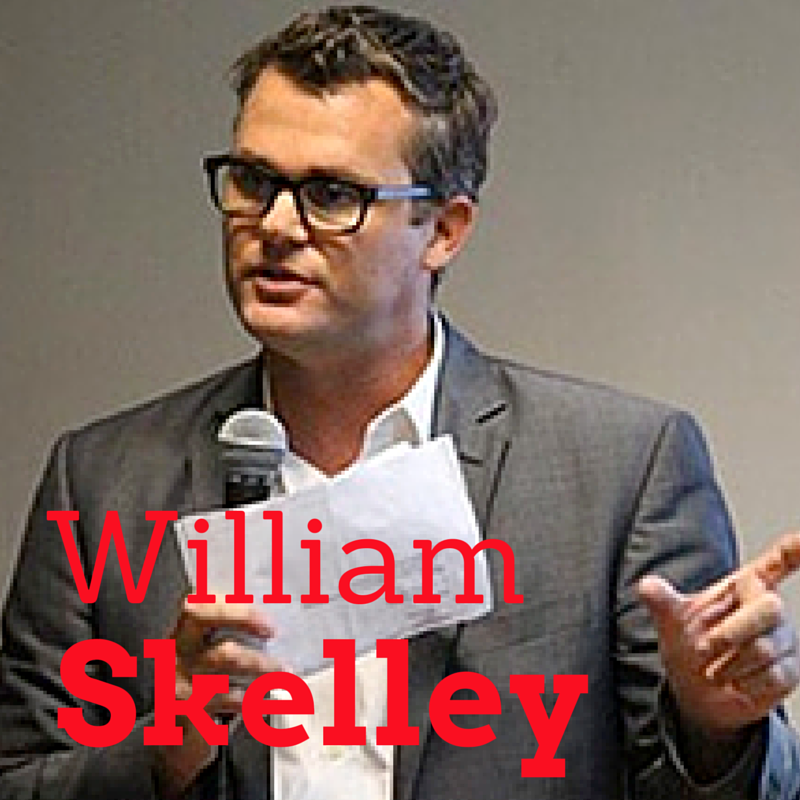
William Skelley is the founder of iFunding, an online investment firm that allows accredited investors to make great investments in real estate on the web. He appears on the AIPIS show today to talk to Jason about what it means exactly to be an iFunding member and how Jason’s listeners can benefit from the website as well.
Key Takeaways:
4:20 – iFunding’s minimum investment per project is $5,000.
7:00 – William says over 60% of real estate private equity money goes into new development.
13:20 – William gives his insight on the future of crowd funding and where he sees it going.
15:45 – William does background checks on all of the people his company gets involved with to prevent fraud and scams from happening.
18:33 – William breaks down the kind of fees a potential investor might face when working with iFunding.
22:00 – Jason asks why William’s company has a .co domain name and not a .com one.
Tweetables:
“Debt in this country is kind of complicated.”
Mentioned In This Episode:
https://www.preqin.com
http://www.lexisnexis.com
https://www.ifunding.co/
Transcript
Jason Hartman:
Welcome to the AIPIS Show for Accredited Income Property Investment Specialists and those who desire to be. This is your host, Jason Hartman, where we talk about increasing your income, your productivity, and just generally having a better life while serving your clients better with America’s most historically-proven asset class, income property. We have a great interview for you today and we will be back with that in less than 60 seconds.
Announcer:
What’s great about the shows you’ll find on JasonHartman.com is that if you want to learn how to finance your next big real estate deal, there’s a show for that. If you want to learn more about food storage and the best way to keep those onions from smelling up everything else, there’s a show for that. If you honestly want to know more about business ethics, there’s a show for that and if you just want to get away from it all and need to know something about world travel, there’s even a show for that. Yep, there’s a show for just about anything only from JasonHartman.com or type in Jason Hartman in the iTunes store.
Jason:
It’s my pleasure to welcome William Skelley to the show. He is the co-founder and CEO of iFunding and that is a new high-tech crowdfunding company with the first mobile crowd funding app in the market place. We’re going to talk about some unique ideas. He’s coming to us today from Manhattan, New York. William, how are you?
William Skelley:
I’m well, Jason. How are you today?
Jason:
Fine, thank you. It’s good to have you on the show. Crowd funding is an exciting industry. You know, the Jobs Act has changed a lot. I think it might the one great thing Obama has done is sign that bill. *Laughter*. There’s a lot of new opportunities opening up. This is a bit of a game changer, I think. Do you feel the same way I do?
William:
I do, it’s an exciting time for real estate crowd funding. It’s a lot better than it was certainly 18-24 months ago when I started the company. If you Googled real estate crowd funding virtually nothing would come up and seems to have gotten most traction in the past 4-6 months.
Jason:
Right, right. So, you know, what do you see as some of the opportunities for investors and for crowd funders out there and then I wanna ask you about some of the pitfalls as well in both sides that you should be watching out for.
William:
Sure, one of the most important things is I always talk to our investors about is access. So, historically a lot of the private real estate deals have been funded by friends and family and/or the larger deals by private equity firms. I like to use the private equity analysis because we really focus on, what I call, institutional quality opportunities for investments. Currently today there’s roughly 8.6 million accredited investors in the United States.
7.8 million of those 8.6 have a net worth between 1 and 5 million. So, if you look at their allocation to a real estate portfolio from a personal perspective, they get really good access to really good high quality private equity funds like a Starwood or a Blackstone where the minimums are typically one to 5 million dollars in sales.
Jason:
Right.
William:
So, it’s really about giving access to the average investor who may be in Tulsa, Oklahoma and do not have strong ties to wall street or connections.
Jason:
What kind of minimums are you offering on your platform? Minimum investment levels?
William:
Sure, our minimum per project is $5,000.
Jason:
When you say institutional quality investments, what exactly do you mean by that?
William:
Sure, we’ve done a lot of different projects, but I’ll give you an example one of the more recent ones we closed today. It is a larger project in Texas. The total project cost is in the $5 to $6 million dollar range where the equity component or requirement was $2 million dollars. Obviously, to crowd fund $2 million dollars for a project is quite a feat for crowd funding today. So, what we’re doing is taking smaller slices of the overall equity component. That allows our investors to participate in larger projects themselves and also track higher partners who may have done more projects and have a better track record.
Jason:
But, you know, the reason I ask you that and maybe I’ll play devil’s advocate with you for just a moment; Institutional quality, that always struck me as kind of a funny thing. I know that institutional players generally go for, you know, class A and B type properties where, you know, individual investors might go for class C type properties that they can improve and get a greater upside on potentially. It’s funny because as the deals get larger in the real estate space, the returns actually decline.
You know, these institutional investors will do these higher-end brand new apartment complexes, for example, or office complexes and those just don’t have the kind of returns that smaller deals that are not brand new have. I don’t know. Of course, that’s a stereotype, I’m sure that’s not always true, but it just strikes me as funny when I see some on these institutional deals go down and I’m like, they did that whole deal on a 5-6 cap rate and in my personal real estate investing portfolio, I’d never do a deal like that. *Laughter*. You know, I wanna get 8 or 9 cap if I can.
William:
Jason, I think you hit the nail on the head there. It’s not necessarily, when you are talking about cap rates, which is specific to real income real estate assets. When I say institutional quality, I mean re-development. If you go on Preqin.com, which is the analysis of all the private equity investments in the world. You look at real estate specifically and last time I looked and this was..my data is probably 18 months old, but over 60% of all the real estate private equity dollars or institutional money goes into new development.
So, when I talk about institutional quality, I’m talking about new development, which is going to have at highest returns, because you’re taking out a lot more risk. You’re not buying existing shopping center or a dollar general, you’re taking financing risk and development risk as well.
Jason:
Yeah, that’s true. There are bigger deals. They’re probably pretty safe deals, you know, it’s not likely that the class A apartments don’t rent. They may not rent in terms of ratios as good as number of the lower end properties, but they also don’t have as many problems associated with them, right?
William:
I would say yes and no. As a general rule of thumb, I would agree with you yet having lived through a couple of room and bust cycles in my professional career, looking at what happened in 2007-2008, specifically being here in New York involved in multi-hundred million dollar projects.
There were projects that were solid operators and solid places in Manhattan that just stalled because the bank financing sort of went away. Why did that happen? Because the underlining tenants license in these classic office building, to use your example, stopped paying $70 a foot in rent and would only want to pay $35 or $40.
Jason:
Right, right. I agree with you in bad times everything becomes more necessity oriented and less luxury oriented. What I was referring to though was when you look at the apartment complex as the asset class, lower end properties have more social problems. You know, more evictions issue, more collection issue, more drug issues, police issues, that type of stuff. That’s what I was referring to. You don’t have those in class A in apartment complexes as often. You have them everybody, but just maybe not as often.
So, you have a certain focus in terms of assets that you offer and it sounds like it’s equity-based more than net-based, is that correct?
William:
Yes. Out of the 20+ project that we’ve done, we’ve done only one debt offering.
Jason:
And why is that?
William:
Well, first of all it’s my background of prior to finding the company outside of the hedge fund working for a professor of mine, but prior to that, I had been raising equity from friends and family and I noticed how difficult it was to sort of syndicate. Pick up the phone, email, back then we didn’t have Dropbox, so knowing the challenges that I had previously with raising equity and blending that with technology that is available today, I thought it would be a great fit.
That being said, the majority of our competition, while they do offer equity, a lot of them focus on debt as well.
Jason:
Right, right. Are there some law in terms of debt that make it more complex and that’s why another reason that equity is maybe a better way to go?
William:
Equity is certainly more difficult to figure out in my opinion. In terms of lending in the United States, there are, even if you’re a private funder, not a commercial bank/regional bank, you do run into certain state issues within each state itself where as equity there are no restrictions.
Jason:
Right. It’s kind of odd, it seems like it almost should be the other way around if they are going to make more restrictions, but debt in this country is kind of complicated and legally from a regulatory perspective, I guess.
Tell us about some of the deals? You know like what are you offering now, for example.
William:
Right now the majority of stuff that we’re doing today are ground-up residential development. That ranges from building 10 brand-new homes in a certain sub-division to a 180 homes which will be apartment rentals.
Jason:
Okay, what’s the size of that deal?
William:
The deals range from $5 million dollars total project cost up to $80 million dollars.
Jason:
Wow, big. So, the equity portion of that last deal that you mentioned, how much are you raising for that or is that the raise amount?
William:
Typically a larger project like the requirement would be $20-$25 million of equity of which we would raising roughly a million dollars of that.
Jason:
Okay, when is it as small as a $5,000 minimum investment, talk about access. I mean, you know, the little guy can now play in the big game, which before they just didn’t have that opportunity.
How many investors can you raise from? I mean, is there a limit to the number of investors you can take on in a deal?
William:
There are limits and we try to look at our historical average investment per project and blend that within certain laws that would apply for it. For example, the general rule of funding is you can’t have more than 100 investors per projects. So, if we’re raising a certain amount of money, we’d divide that by a 100. We also look at the average investment because a lot of people don’t just put in the minimum.
So, we sort of try and make our best guess-timate in terms of what would establish the minimum investment of that. Obviously we’d love to do it $5,000, but we also wanna make compliance as well.
Jason:
Right, right. So, some investments the minimum is higher and some it is as low as 5, right?
William:
Yes.
Jason:
Okay, great. Good to know, good to know. Tell us what you think of the future of crowd funding. How will this evolve? It’s such a new thing. I guess it’s always been there in terms of private placement memorandums and so forth, but you know, crowd funding online combined with technology. Where do you think it’s going?
William:
I think it’s going in the right direction. When we started this company there was a small handful of us some who you may or may not know. Today, we just worked with the Wall Street Journal to do an article on the space itself. We have an internal document that is close to 75 to 100 platform out there today.
In our analysis of the space itself, we predict there’s going to be 3-5 multi-billion dollar platforms in the future who are going to focus on their own specific niche. One may be a re-conclusive-ing platform. We may become the equity platform for new development. One may be more community driven like Fundriver. So, I think we’re going to find these little niches throughout the entire industry.
Really, we’re not doing anything new than I was doing, you know, 5 or 6 years ago. Raising money off line from private individuals and friends and family. The only thing we’re making a centralize location via technology to conducting due diligence to get investors. We’ll have one day, for example, when the app you mentioned earlier came out a couple of weeks ago, we were getting an average of 50 new investors everyday signing up on our website. Not in the history of my professional career could I have go and get 50 investors.
Jason:
Right, absolutely. So, you know, the reach is a lot higher. Do you think there will be, because this is obviously much less regulated, do you think there will be a lot of scam artists out there and people losing money through bad deals whether through incompetence or scamminess? Which ever way.
William:
I think within any industry there’s going to be bad actors and bad deals. I think we as a firm have a policy where we try and mediate that as much as possible. So, what we do is we go through a broker dealer. We’re registered rep of the broker deal. We’re 100% compliant. You can go on the FCC’s website, look at all of our offerings, the filings, and make sure we’re doing everything above the board.
Then on the due diligence side, for example, we use due diligence platforms like LexisNexis where we’ll do background checks on, criminal background checks, on all of our operating partners, people who we get involved with, so there’s a lot of ways to mediate that.
Can you mediate it with its entirety? I don’t think so. Will something bad happen? Yes. It’s only a matter of when, but we try to do our best here at iFunding and mediate that best way possible by taking our collective experience of our professional who have worked with some of the Wall Street’s largest banks. Take the same due diligence that we would do at a large firm like Goldman Sachs and applying that to our due diligence at iFunding.
Jason:
In terms of the fees an investor faces when they look at a deal or, you know, maybe I should say..what do you call it? The promoter of the deal? The person who has the deal and comes to your platform, what name do you give them?
William:
We would call that a promote. What they would get at the end of the deal for putting the deal together.
Jason:
Yeah. So, what type of fees are taken out? I mean, the crowd funding platform charges a fee and then also the people who setup the deal charge fees as well, you know, when they bring that deal to your platform and people invest. You know, they pay themselves maybe salaries or they get a share of the profits, of course.
William:
Sure. That can certainly happen on other platforms. What we try and do we try and form a partnership with our operating partners and as a general rule, a 98% of the fees we would make and our operating partner would make would be success based. So, we simply charge what’s call an administration fee up front, which would cover our FCC filings and some minimal due diligence cost.
The way we make money is after our investors get their principle back, plus a preferred return of 8-10% then there’s a profit sharing back, so we try and make as success-based as we can and align our interests with the success of the project and not sucking fees out throughout the length of it.
Jason:
So, do you wanna get specific of any of those fees? Like, what does it cost to, you know, for the initial fee and ongoing or is it just deal-by-deal?
William:
It varies deal-by-deal. Let’s say on average we take a small percentage, which is typically less than 1% or 2% to cover the upfront fees and on the back-end we typically take a percentage of our investors profits.
Jason:
That’s of money raised percentage, right?
William:
Correct. So, if you invest a $100,000 in a deal and it is a 1 year project and this would further churn 10%. We would give the $100,000 back to the investor plus the $10,000 for their preferred return and then any left over profit we would typically split 80/20.
Jason:
Okay, so you’ve got that 80/20 model in there. I’m trying to compare this to, you know, of course for the potential investor listening, how does it look compared to a mutual fund? How does it look to a direct real estate deal that you own and control yourself? How does it compare to a hedge fund to a 2 and 20 type of basis? Just, give an investor an idea of what they’re looking at in terms of fees.
William:
Sure, I’d say of the highest fees that are typically charged are REITs. A lot of people don’t know this, but when you’re investing in REIT, the actual REIT themselves…
Jason:
A Real Estate Investment Trust is what he’s talking about. Go ahead.
William:
Real Estate Investment Trust, those are often funded through a network of broker dealers. This broker dealers charge 10% of the capital they raise to be an investors upfront. So, if you invest a $100,000 into a REIT, you’re starting the day out at $90,000. You have to make up that 10% or 11% even before you hold.
What we try and do is charge minimal fees upfront, simply to cover our costs, and charge a percentage of the profit on the back-end. More similar to what a private equity fund would do, which will be called, ‘Carried Interest’ or ‘Percentage at a Profit’.
Jason:
So, what else should I be asking you about crowd funding? What else do you wanna say to the listeners?
William:
I would say that it is very important that any real estate investor using a crowd funding platform should do their due diligence. You should do searches on the FCC and Edgar website. Make sure they are 100% compliant and filing all their offerings with the FCC. I think that’s the most important thing. I would also try and get a very good understanding of the professionals.
Do the professionals have real estate experience? I know there’s some platform out there that are run by 20 year old, 20 something year olds with no real estate experience. They’re just know how to build a website. So, I think it’s a blend of making sure from the due diligence perspective the platform itself is compliant from the regulatory perspective and also make sure the professionals have multi…In the example of our firm, the professionals here have had billions of dollars of real estate experience. Don’t be shy. I would feel free to call up these platforms, speak to these individuals, and say, “How much experience do you guys have?”, “Do you have a track record?”, “Can you share that with me?” I think the more you engage these platforms you speak to, the better off you’d be in the end.
Jason:
Okay, good. Good stuff. Well, give out your website. I mean, it’s already sort of self-evident in our discussion, but go ahead and give out the website if you would.
William:
Sure, our company is called iFunding. It is www.iFunding.co. Not .com and we’re located here in Manhattan, New York.
Jason:
Yeah, interesting. So, I’m just curious too. Why did you use a .co name? That’s a Colombian domain name, high level domain extension, why did you use that? Because you wanted to not be under the US jurisdiction? There’s a lot of people after the NSA scandal came out, Edward Snowden, they stopped buying .com domain names because they didn’t want the government to be, you know, in control of the domain name. I thought it was pretty interesting. I bought a few myself. *Laughter*. Maybe the US will shut down the internet, who knows.
William:
My own experience, we choice..we are very involved with the startup community here in New York City and if you look at one of the largest venture capital platforms out there right now called AngelList, they use a .co. There’s also a personal connection. One of my former business partners, who is Colombian, is a gentleman who ran the .co business and I wanted to support him as well.
I think you’re right. You’re seeing a lot more newer companies using a .co domain address, whether, like you said, US Government, Edward Snowden stuff and the .coms. I just think it’s just sort of a new domain extension that a lot of the young companies are very comfortable with. It’s only one less letter that you have to time, too.
Jason:
Yeah and you get more selection to make a domain name. The other one they’re using a lot is .me, which is Montenegro. I was in Montenegro last summer actually, so it’s kind of interesting, but the myth is that the .TV. That is actually under control of the US even though it was originally that little island of, what’s it called, Tuvalu or something like that, but they sold the rights to the US. *Laughter*. So, the US controls .TV. They didn’t originally, so kind of interesting.
Well, good stuff. This is an interesting discussion on crowd funding, folks. I think a whole new world is upon us and it will be very interesting to see how it all unfolds. You know, just to give a lot more business people and investors who are setting up deals, I just think a lot more money is going to flow away from Wall Street into, you know, these crowd fund deals and individual deals. I mean, the individual deals have always been there, but you don’t have to go to Wall Street anymore necessarily. You can go to a company like yours and do your own stuff, which is a neat opportunity. You know?
William:
Yes and you mentioned at the beginning of the show, we’re the only platform out there that is mobile, so you can be at home in bed with your iPad and making..
Jason:
You can be investing all the time! *Laughter*. Awesome. Good stuff. Well, William Skelley, thank you so much for joining us today and I wish you much success.
William:
Thank you so much, Jason. Take care.