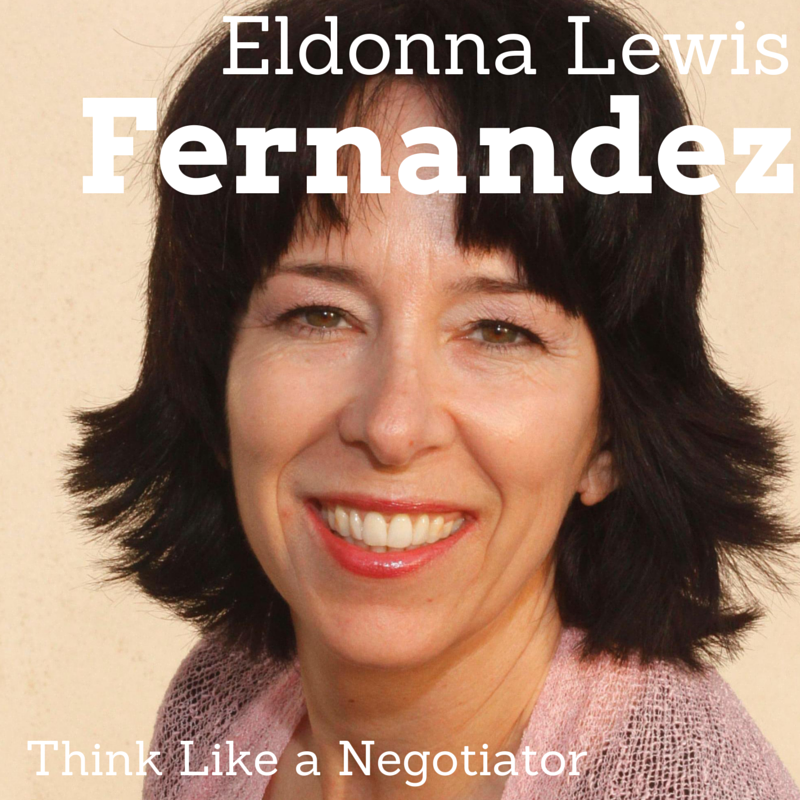
Eldonna has worked in the Air Force as a contract negotiator for 23 years. She has worked with contracts ranging over $100 million for the military. She now helps teach others how to be a great negotiator and has appeared on Fox Business to talk about the power of negotiation. She shares tips on the show today on how you can leverage your skills to be a better negotiator and get exactly what you want.
Key Takeaways:
2:50 – The first mistake in negotiations is lacking confidence. Go to yard sales to haggle and build that confidence.
5:20 – You can always walk away during a negotiation.
9:30 – You have to gain experience to be a good negotiator.
13:35 – People often don’t ask because they’re afraid of the ‘no’, but you just have to keep asking in order to get what you want.
17:00 – It’s important to let go of any resentment or negative talk you might have. When you let go of the resentment, you can help yourself succeed.
19:00 – Make sure you have a positive set of friendships around you. You are the first 5 of your closet friends.
21:20 – You have to have fun. Remember to have a fun when you do this!
Tweetables
“Everything is negotiable when you think like a negotiator. Being able to walk away is also a negotiation strategy.” Tweet this!
“Often times people won’t ask because they’re afraid of the no, because they don’t know how to handle then no.” Tweet this!
“I would say resentment is the poison that we take that we think kills others, but it really kills our spirit.” Tweet this!
Mentioned In This Episode:
http://thinklikeanegotiator.com/
Transcription
Jason Hartman:
It’s my pleasure to welcome Eldonna Lewis Fernandez to the show and she is CEO of Dynamic Vision International and author of Think Like A Negotiator – 50 Ways to Create Win-Win Results
by Understanding the Pitfalls to Avoid. Eldonna, welcome! How are you?
Eldonna Lewis Fernandez:
I’m great! Thanks so much for having me here. Love talking about negotiator.
Jason:
You’ve done a lot of negotiation with your background in the Air Force, right? Tell us a little bit about that.
Eldonna:
I have, I was in the Air Force for 23 years and I kind of stumbled in the contracting career field by accident. I wanted to go into computers and at that time computers was considered an administrative type job and it wasn’t on the list of available jobs when I went to enlist in the Air Force. They said, “Oh, you can pick your job at basic training.” Little did they tell me there was slim to no chance that the computer job would be on my request list, it would be available for me to choose.
So when I got there they saw that there’s one job that had a really required scored and they said contracting and all the other jobs had really low scores and I said, “I don’t know what that is, but I think you need to be smarter to do that job than these jobs, so I’ll pick that.” and ended up staying in the Air Force for 23 years as a contract administrator and negotiator, contracts manager, all those kind of term. Retired from the military and went to work for some aerospace contractors doing contracts and negotiation on the other side of the table.
Jason:
Very interesting, so what is it like negotiating government contracts? People would think, maybe a contract negotiator doesn’t that hard because it’s not their money right?
Eldonna:
Well, there are certain things were it’s kind of cut and dry, but there are certain situations where you’re put it in to…a lot of the negotiations, a lot of contracts are awarding by, what’s known as field bidding, where you just get the bids and award it.
There are other contracts that require evaluation and discussion, then once you get into the administration of the contract there’s a lot of negotiation that comes up because there’s modifications, there’s situations that come up, there’s errors in the specs or the drawings or the state of work, and that requires a lot of different types of negotiation as well.
Jason:
Very interesting. Well, let’s talk about some of the very common negotiating mistakes people make. Sometimes starting with mistakes is a good way to start.
Eldonna:
Definitely. Mistakes are just kind of those things, common things, that I’ve seen, that I’ve personally done myself and kinda see what other people do as I go on speaking and training about negotiation.
Jason:
Okay, so what are some of those mistakes?
Eldonna:
Well, the first mistake would be lacking confidence or thinking you need more confidence than you have. You don’t have to be loud, you don’t have to be in somebody’s face, you don’t have to be brazen to be a good negotiator, but having a sense of confidence and a level of confidence is necessary when you go into a situation, especially if you’re own the phone or if you’re talking with somebody in person.
They can sense whether or not you have a level of confidence and if you don’t, they’ll use that as leverage against you. So, building confidence comes from actually getting more experience in negotiation and often people say to me, “Well, how can I get experience without negotiating?” *Laughter*.
Jason:
The paradox of life. I can’t get the job because I don’t have the experience, but I can’t get any experience if you don’t give me a job.
Eldonna:
Exactly. One of the best places to get free negotiating training is a yard sale. Think about that. No body is ever going to get what they ask for at a yard sale, so that gives you the perfect opportunity to use and train your negotiation skills.
Jason:
Yeah, go and haggle a little bit, good. Lacking in confidence, that’s the first big mistake, that’s a good point, and you can get confidence just by going to a yard sale. Good, good. Certainly those are plentiful.
Eldonna:
Well, thinking something is not negotiable. If somebody says to you, “Oh, these terms and conditions are the way it is. No negotiation.” Well, everything is negotiable when you think like a negotiator and even being willing to walk away as a negotiation strategy. I recently had a contract that I presented to do some work and the person said to me, “No negotiations.” and I sent back a reply saying, “Do you really mean no negotiation, because I don’t want to waste your time if there’s things in this contract I have problems with and if you’re not going to allow for discussions, then I’m just willing to walk away.” and then they came back with, “Oh, no, no. Please. Let me know, it’s open for discussions.”
When you think things are not negotiable, really most of the time they are and again, being willing to walk away is a negotiation strategy when somebody really says, “Oh, it’s not a negotiable.” A lot of the times when you say, “Okay, well I’m just going to walk away from that.” Then the tables are usually turned, “Oh no, no, no, it’s opened for discussion.”
Jason:
The old take away close. *Laughter*. Okay, you have another one or two?
Eldonna:
Well, a big one is not building relationship first. We are in a relationship economy, but too often, I don’t know if you’ve ever been to a networking event where people want to go around and harvest cards and you get put on 500 mailing lists.
Jason:
Oh yeah, definitely.
Eldonna:
You don’t even know the people. They haven’t taken the time to talk to you to find out they’re the right and perfect client or not. That you’re the right fit for them. When you take the time to build relationships with somebody, you can actually listening to what they say and find out whether or not you have something that would help them.
It’s very important to just get to know something about the person more than, “Oh well, what do you do? Where you from?” Like maybe, “Where’s your name come from?” or “What kind of me time activities do you like to do?” You find out how to find a real conversation with somebody. The perfect example of that was when I was deployed in the middle east and did business over there.
The price was based on the relationship. If you went into a place and said, “Give me price, I want this, and leave.” They would get highly offended and they would charge you twice as much. If you take the time to sit down, like I would take 45 minutes, maybe an hour or more, to just have a little conversation. How’s it been going? How’s business? It’s kinda hot. What’s going on? How’s your family? Have any pictures? And then, the guy would usually ask me, where’s your list? You hand them your listen, he hands it to his guide, that wasn’t until we built a relationship, maybe an hour into the conversation, that was every single time. We just really need to take a lesson from that and take the time to build properly relationships.
Jason:
So, building relationships in advance. That’s all good advice. I’ve got a specific question for you on negotiation as to whether or not this is a mistake, because I’ve heard two versions of it, you tell me what you think. There’s an old saying that the first person to mention a number loses, okay. That’s kind of the old negotiation idea. Now, I’m not sure if that is true or if the possibly, at least, from a more contemporary negotiation training I head and she said that it’s better to mention a number sooner because then you set the parameters, you set the context in which the whole conversation and negotiation will take place. What do you think?
Eldonna:
I think it’s good to put out a number early on if you’re having a discussion like that. One of the adages I heard that’s sort of a twist on that it comes from some of my other tips is, “He or she who speaks next loses.” That’s when you get down to the end of the negotiation and you’re going back and forth and back and forth and you’re having heavy discussions or just the discussion is going back and forth. The tip is, or the mistake is, talking too much. You get to the point where you’re going back and forth and back and forth, then you get quiet.
Usually he or she who speaks next is the one who’s going to concede on the negotiation. He or she who speaks next loses. So, talking too much in a situation, you can talk yourself into or right out of having the power position in the negation, but i think in the beginning, you want to know where you’re starting from. You want to have a starting point to work from. Okay, here’s the parameters. Here’s the investment amount and then you go from there. I think, up front, you do want to know there parameters are, because you can’t really start from anywhere if you don’t know, so I think it’s good to put those out first.
Jason:
Okay, put the parameters out first. Good. You mentioned going to a yard or flea market or whatever to get some practice. Certainly you can practice your spouse or your kids if you have those. *Laughter*. There’s places to practice, what other ways or exercises people can do to get better at negotiating?
Eldonna:
Well, kids are a great place to train your negotiation skills, but also doing a formal training. I do a training twice a year on negotiation with a lot of experiential gains. It’s just about getting the experience. I don’t think you can learn negotiation by actively listening to it. You can get some tips, you can get some ideas, but you have to actually go out and do it. Many people wanna flip a light switch and be an expert. Instant expert, an over night success. That just won’t work.
You have to go out and find some places like I said, a yard sale or you’re selling something, maybe you’re selling something from your house or you’re going to buy a car. Those are all opportunities to train your negotiation skills. Obviously, you want to train in the milder arenas, which is a yard sale or a swap meet or something like that before you start to go to the bigger areas. You don’t want the stakes to be too high and if you make a mistake, the cost may be costly for you. It’s just a matter of, I guess, building up your skills and drilling your skills continuously, so when you do have that opportunity to use those for real, you have more of a background of experience that you can pull along with you.
Jason:
What other tactics or methods of negotiation are there? I mean, I’m not sure what I should ask you here, but maybe you want to talk about..are there are different types of negotiations? Do you categorize this type of negotiation versus that type of negotiation and are the techniques different? It depends what you’re on, I suppose, if you’re the seller or the buyer, of course. Just any thoughts there?
Eldonna:
Well, a lot of it depends, I guess, where the power lies. If you have more of a powerful position, then the other side, the strategies might be different. If you’re on the side that has less power, some of th normal strategies or sayings like split the difference and things like that, but that might not work in a certain situation.
If you’re negotiating a construction contract, for instance, and you want to split the difference on the cost of the materials, spiting the difference might really hurt the person on the other side, because it might affect their costs in a negative way, so you don’t wanna use that kind of strategy in that kind of situation, so you have to go to another strategy.
It’s all about what the negotiation, what you’re discussing, and the biggest thing is to prepare in advance. You want to consider, “Okay, I’m going into this kind of discussion, these things are not going to work. I’m going to talk about these things here and you kind of lay it out and you think in the idea of, “Okay, if I ask these questions, I may get these responses, and here’s what my answer would be to those responses.” Basically, you have a little mock negotiation with yourself before you go in and sit down and negotiate with them.
Jason:
So, how do we know who’s in the more power or less powerful position?
Eldonna:
Well, I guess that depends. In the situation when I was in the government, I obviously the government issuing the contract had more power than the contractor. Government has a certain amount of money to spend, contractor is going to have bend more than the government is going to have to bend and that kind of situation. So, a contractor going in is going to know their position might not be as power as the government in the certain circumstance like that.
It’s kind of, government entities may have a little bit more power or even the contractor may have power in a certain circumstance when they’re the only source or one of the few sources that can fulfill that contract and the government really wants it. If it’s something you have to offer and you’re one of the few that offers it, you may have more power, because you can leverage it, because somebody else really needs that service or product, and you have that power because of having one of the limited number of people in existence that have it. It’s just kind of depends.
Jason:
So, any other distinctions on different negotiating contexts. The power one is one of them. I suppose business versus personal, of course.
Eldonna:
One of the other mistakes that a lot of people make is not asking for exactly what they want. Many times we just don’t ask. We don’t ask because we fear rejection. People say no three times before they say yes, because we’ve been condition from a kid, they hear no. They think about the things you were told as a kid. Kid running around, touching this, touching that, no don’t touch that, no don’t do that, no, no, no, no.
So that’s kind of conditioned in our DNA, so people sometimes just automatically just say no or no is just a request for more information. Often times people won’t ask because they’re afraid of the no, because they don’t know how to handle then no. You don’t get, if you don’t ask. It’s very important to ask. Sometimes you have to ask more than once. You have to figure another way to ask, if you have to ask three, four, five, six, ten times, if you really want that particular thing. You have to keep on asking.
Jason:
So, there persistence in the asking. You know, sometimes the situation of the other party changes where they might say no today, but they’re say yes tomorrow, right?
Eldonna:
Right, one of the questions you can ask to know now when it’ll be yes or how can we get to yes, or what kind of things do you need in order to make it a yes. Asking different questions to get the answer you need and not that you’re going to get a yes every single time, but most of the time, if you are persistent and you keep asking, you figure out how to make it a value added to their side too, the yes will eventually come.
Jason:
You talk about some interesting things about rules of engagement and that’s a great military terms, or phrase there, you have 5 rules of engagement that ensures success. What are those?
Eldonna:
Those are personal rules of engagement. I call this a building a relationship with yourself, which I think before you build relationships with other people, you need to build a strong relationship with yourself first. The first one, turn negative self talk into powerful self talk. That’s the thing in your head that says I can’t do that, I’m not good enough, I’m not strong enough, I’m not rich enough, smart enough, pretty enough, handsome enough, whatever enough, you have to figure out a way to turn that around and turn that off.
The second one is to release all resentment. I would say resentment is the poison that we take that we think kills others, but it really kills our spirit. If you’re carrying a lot of anger and resentment..anybody who’s ever read anything about me and my past knows that I came from two alcoholic parents. My mother died of alcoholism when I was 12 towards my parents on into my life. My father died when I was 22. It took me a lot of years to get rid of that stuff.
Jason:
Right.
Eldonna:
I didn’t realize, it wasn’t hurting them, they’re gone. You have to deal that stuff. Get rid of that stuff, get it out of your body, it doesn’t mean forgiving somebody, doesn’t mean you have to have them back in your life, it just means you let go of the energy that’s kind of grasping you and taking control of you.
Jason:
Yeah, makes sense. Any tips on getting rid of that resentment?
Eldonna:
Well, that’s a whole lot longer conversation, but I would say just there are a lot of programs you can do to work through to release the resentment or go to workshops, go to a therapist, somebody that will help you to see to let go of that stuff. I mean, I was raped in the military and to be able to walk around as free as happy as I am and not have that junk cloud my mind, cloud my happiness, it’s joyous. I’ve released all that. Every time I get angry with somebody, I pray rose petals at people’s feet. *Laughter*. Sometimes, I have to do that a long time, but I do until it’s gone and it’s not negatively affecting my life.
Jason:
Right, yeah. Good advice. Boy, that’s an amazing story. Wow. Good. Okay, other rules of engagement?
Eldonna:
So, once you let go of the resentment, you’re dealing with the self-talk, you want to surround yourself with people who hold you to a higher standard. Not people who bring you down. That’s a group a friends. I always say we can’t pick our family, sometimes you have to distance yourself from family members, but you can’t choose who you were born into.
It’s those people that you hang around, you hang around people when you share your dreams that say, “Oh, yeah. I support you.” or are they people that say, “Pssh, what you wanna do that for? You can’t do that. Your never do that. You’ll fail. Give it up. Forget it.” or do you hang around a bunch of people that gossip and run people down and talk negatively. Listen to what the chatter is, what they say, you don’t want to be around people like that. You want to be around people that are like, “Yes, you can do it. I support you. How can I help you? Go. I’m proud of you.” Those are the kind of people you want to be around.
Jason:
Absolutely. I’d like to say, remind people that Jim Rohn quote, it’s a great one, he said, “Your income will be the average of the five people you spend most of your time with.” You know, it’s all too true. So, we want to make more money or have more success in whatever field, we’ve just got to understand that principle that we’ve gotta choose the people that influence us.
Eldonna:
That goes along with your attitude as well. Your attitude.
Jason:
Right, tell me about that. What about attitude?
Eldonna:
Well, your attitude is that of the five people you hang around the most. That’s what the surrounding yourself with people who hold you to a higher standard. Have a bad attitude, that’s going to affect your attitude, that’s going to affect your self talk, it’s going to affect how you operate in life.
Jason:
It’s amazing to me, Eldonna, that people actually think they can be immune from that. Be immune from the influences of their friends and the people they spend time with. The fact is that’s just not true.
Eldonna:
It’s not, it’s not true at all.
Jason:
They’re going to influence you whether you like it or not.
Eldonna:
Definitely and I would take that one step further. Be careful what you read, be careful what you watch, be careful what you put into in your head, because that stuff influences you. We’re surrounded by negatively each and every day of our lives. Look at some of the lyrics to songs, look at the shows on TV, a lot of the reality shows with people tearing each other apart.
Jason:
Oh yeah.
Eldonna:
You just gotta be careful how much of that stuff you put into your space.
Jason:
Consider that stuff old junk food and you should really, really limit your exposure to it. So, what do we have, a couple more rules of engagement?
Eldonna:
Yes, the next one is take positive action towards your goals and dream. Dreams without actions are just fantasies. You want to take action, take accelerated action, take massive action, take action to make those things happen. You can’t just have a dream and sit there and think you’re going to visualize it into existence without taking any action on it, you have to do something to make it become a dream and it’s not going to happen over night. It takes work.
One of my favorite quotes that I say is, “The power is in the work.” You do the work. You keep doing the work and you keep alining yourself with those people who believe in you, get rid of all that resentment and that negative self talk and you’re going to be on your way to success.
Jason:
Good advice.
Eldonna:
And then the final one, which is very important. You’re doing all this work, you’re working real hard, but you gotta have some fun. You have to have fun in there, you have to do that me time activities that bring you passion, that brings you joy. One of my things, other than shoe shopping..
Jason:
Do you negotiate a good deal on shoes? *Laughter*. By the way, just want to mention on that, we’re kind of were joking about it. Folks, you will be amazed at how reality stores where you think the price is the price, they have discount programs, they have deals, sales, memberships, loyalty programs, all kinds of stuff, that you can simply by asking the clerk, they will literally just give money away.
Eldonna:
Again, it goes back to asking. I get stuff off a retail all the time, but the having fun portion, like to me, my fun activity is riding my Harley. I’ve been a Harley rider for 19 years. That’s my me time activity. That’s what gives me joy. You need that or you’re going to burn that. You need to do something fun in your life, that’s why in my training that I do I have an element of fun in there so people can go in and learn and kind of let it off and have some fun. You have to have fun.
Jason:
Yeah, definitely have some fun. Well, what else do you want people to know in closing on this whole subject of negotiation?
Eldonna:
Well, it goes back to thinking like a negotiator is a mindset. You put on that mindset of thinking like a negotiator, if you switch into that, I’m thinking like a negotiator now, you change how see everything. It’s the number one tip, which is everything is negotiable when you think like a negotiator.
Jason:
Yeah, very good points. Eldonna, give out your website.
Eldonna:
thinklikeanegotiator.com/
Jason:
How appropriate! That’s excellent. Well, Eldonna thank you so much for joining us today and enlightening us on this very important topic. You know, life is an negotiation. We’re all going to phase many, many negotiations in life. We need to get good at it because it’s a very important skills. Eldonna, thanks!
Eldonna:
Thanks so much for having me!