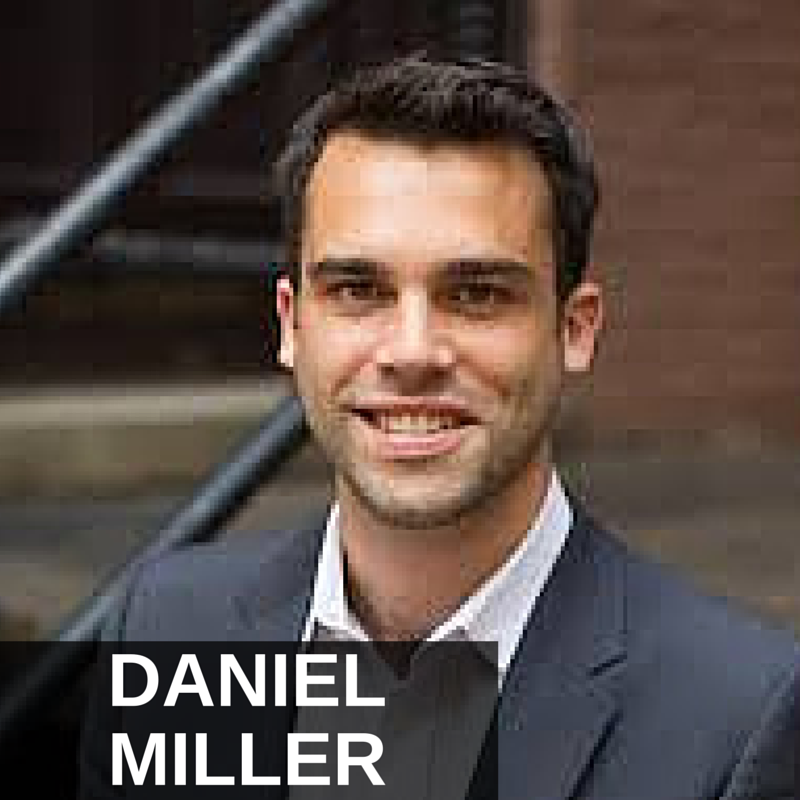
Daniel Miller of Fundrise talks to Jason Hartman about his real estate crowdfunding platform. He talks about how Fundrise got started, why traditional real estate developers are going through crowdfunding platforms, and much more on today’s show.
Key Takeaways:
2:10 – Daniel talks about how Fundrise got started.
5:30 – Fundrise now provides funding for commercial real estate developers.
11:15 – Why do real estate developer go to Fundrise and not a bank instead?
19:08 – When Daniel first started Fundrise, there was a huge resistance among traditional real estate developers.
22:05 – Daniel believes the investment world will be experiencing the same shift the publishing world experienced.
Mentioned In This Episode:
Fundrise.com
Transcript
Jason Hartman:
It’s my pleasure to welcome Daniel Miller to the show. He is co-founder and president of Fundrise and they are a crowd funding company. One of the earliest if not the earliest in the space and it’s a pleasure to have him coming to us from New York city today. Dan, welcome, how are you?
Daniel Miller:
Doing well. Thanks for having me on the show.
Jason:
Yeah, good to have you, so crowd funding is all the rage right now, what inspired you to get into this business?
Daniel:
So, my brother and I founded Fundrise in 2010 and actually initially it was a spin off of our real estate development business. So, our family had been in development in Washington, DC. My brother and I spin off, started buying and developing our properties mainly kind of mid-size urban infill rehabing old buildings, licensing them to local tenants, you know, office or residential above with ground floor retail and we took a handful of these deals of traditional private equity funds, large constitutional investors and realize they just weren’t the right fit of the deal. They didn’t know the neighborhood, they could only write equity checks $10 million and above, which in a neighborhood like H Street North East where we were developing, that was a sizable about.
So, we thought, let’s build a platform, let’s let anybody invest with us in these deals. Why can’t individuals who live near by or who are real estate investors, why can’t they be invested directly in this project. So, we built Fundrise as platform to raise that funding online, worked through the security’s law, took two years of filings on our first yield about $500,000 of legal to make it possible. In 2012 we launched Fundrise, raised $325,000 through 175 investors, any resident of DC or Virginia could invest as little as $100 in the project.
Jason:
Okay, wait a second, hang on, I got a bunch of questions you keep adding here. So, you spent half a million dollars in legal fees and this was before the Jobs Act, right?
Daniel:
This was before the Jobs Act. This was the only way to be able to sell to non-accredited investors online, so as the first crowd funded real estate transaction in the country and at that point this was the only route to do it.
Jason:
Right. So, what law did you do it under? Was it 500 series offering or?
Daniel:
Using regulation A, which has been on the books the whole time, but rarely used. It requires a state and SEC joint filing to get qualified offering and then you can sell to non-accredited.
Jason:
Why did you go the non-accredited route? Were you able to advertise? You must have, I mean, if you’re looking for people that are doing tiny contributions, 100 bucks, you got to advertise, right?
Daniel:
That was the plan, so when we went to attorneys and said, you know, we wanna, we’re developing this real estate, we want to put it online, let anybody invest and publicly market it, you know, the first response to most attorneys was that’s a terrible idea, that’s not possible, and at that point before the Jobs Act reg D did not allow general solicitation, so the goal from the beginning was let anybody invest, but had reg D allow general solicitation, we might have used that route, but because at that point it could only be existing networking and family and friends, it defeated the purpose of creating this portal and we found the rule regulation A, which one let us generally solicit, so we could broadly advertise, distribute online, social media, marketing, and it let us, let anybody from that state invest, which was important to us because we thought, you know, why can’t the people who live in this neighborhood, why can’t people who know this area, who know the building, who know the tenant moving in, they makes sense as an audience of people to be investing in this project, that tangible knowledge they have, you know, should relate into them being more comfortable making an investment.
Jason:
Yeah, okay, good. That’s a pretty interesting. I mean, the hurdles had to be monumental. I mean, obviously they’re half a million with the lawyers.
Daniel:
It was even figuring it out, I mean, when we sent the filing to the DC state regulators and the SEC, I mean, the DC regulators hadn’t seen one of these since the early 90s. I mean, the reviewer didn’t even know what to do with it, so it was a lot of education and walking them through the process and after the first deal we started to have real estate companies around the country reaching out to us asking to use the platform Fundrise to raise capital for their deals and that’s when we shifted to where we are now, which is funding third party real estate companies.
Jason:
Well, wait, funding third party real estate companies. What does that mean?
Daniel:
So, we’re not a developer anymore. We are providing funding for commercial real estate transactions or real estate transactions for developers around the country.
Jason:
See, there’s a lot of difficult communication here. Of course, crowd funding, like anything, you know, you got to create a new vocabulary to explain things, so when you say funding real estate companies, to me and I think to the casual listener, it sounds like a real estate business. Now, I differentiate that from a real estate deal, which to me connotes a signal purpose, of course it is a company, it is a LLC or an entity of some sort and it’s a company in the legal sense, but to me it’s like this is a deal versus a business that sells widgets.
Daniel:
That’s what we’re funding. We’re funding specific single identified transactions, not blind pool funds, not operating platforms, specific identifiable deal.
Jason:
Now that I mentioned that, with the vocabulary question, are there any vocabulary words that people should know about crowd funding? Like, what do you call the person who has the deal? Do you call them the sponsor or the promoter?
Daniel:
We call them the sponsor, which works in most cases except some marketing people think of it as an actual sponsor, but we use sponsor as the principle in the transaction, the real estate operating company that controlling the deal. I mean, crowd funding in general uses a broad term, but it also relates to a specific regulation, so it’s really an online funding platform. That’s the innovation that you’re using technology to distribute the investments and take investors at a size that would previously not be economic, so having people invest $5,000, traditionally you would have not done that with a private placement. It would be too much effort and paper work, but the incremental cost for an investor is near zero, so you can therefor let investors in smaller amounts. To us that’s…
Jason:
Any other vocabulary words?
Daniel:
No, I don’t think anything else.
Jason:
Okay, so go ahead about your story. This is a fascinating story. So, you’re not doing development now and you’re strictly helping people invest and helping sponsors find investors, right?
Daniel:
Yep, it’s really matching both sides. We have sponsors come to us, you know, offline introductions, online we have offices around the country, so it comes through both channels, we underwrite them as a company, get an understanding of what types of transactions they do and then they start sending us their deals, their specific transactions. We underwrite them, we issue term sheets. We now fund with our balance sheets, so we close with our own capital, there’s no risk of kind of online funding risk is not a sponsor’s risk, that’s our business risk. So, we fund the transactions at closing, then put the deal up on Fundrise to let investors buy into it for $5,000 increments.
Jason:
Oh, not $100 anymore?
Daniel:
Some of the deals we make available for a $100 for true retail, but we do a blend, probably 80% of the deals are limited to accredited, so we do both, but the majority are accredited only.
Jason:
So, every deal that comes to you, you buy it and then you crowd fund it.
Daniel:
Correct and the reason to do this is the sponsors we’re looking with have existing capital sources. Our competition is not another crowd funding platform, it’s another investment fund and so if we can’t guarantee the funds at closing, it’s not going to be a viable source of capital and so we raised about 35 million dollars last year for our organization that we use as a balance sheet for these transactions.
Jason:
And when you buy the sponsor out and Fundrise owns the deal, do you buy them completely out or are they still in and they have some shares?
Daniel:
We’re mostly funding rehab development construction, so we’ll come in closing with the construction loan and then be paid out at stabilization if that’s what you’re asking.
Jason:
Yeah, okay. Is it all development or, I know you specialize in kind of the infill area, which is sort of undeserved. It’s great that you’re bringing in capital this market by the way, because I like these projects personally, I think they’re good for society. I just think they’re a good type of product, you know, we need more mixed use, we need more walkable communities, and I assume that’s some of the angle that you’re really funding.
Daniel:
Yeah and it plays our theme. I mean, our family and my brother and I, we were doing urban infill development, we think there’s a broad macro trend there, it’s under funded segment of the market. Each deal is unique and different, which is why traditional/national funding platforms often have difficulty with it, but what we traditionally do right now is preferred equity on development construction deals.
So, we’ll close traditional senior loan, we’ll lend 65% on the property and instead of the developer/sponsor having to put 35% equity, we might fund half of that amount, you know, 17% of that as preferred equity, Fundrise capital, and then the most junior 17% is their own capital as a developer, so it’s a specific segment of the market, but it is debt and equity gives a high yield to the investors, but also gives them a fixed maturity and exit and after, you know, done about 50 deals so far, that’s what we’ve seen to be, you know, what we need on the consumer side and what is needed in a deal, what we’ve seen matches both sides the best.
Jason:
And why on the supply side, you know, on the sponsor side, why do they come to you or any other crowd funding platform? Is it just a lot more lucrative to them? I mean, not all crowd platforms buy them out, like you do, or at least particularly, you know, why don’t they go to a bank or raise their own money? I mean, all of these people pretty much have raised money. It’s not like they, every developer seems like goes out and raises money from their investor pool. What’s the advantage to them?
Daniel:
Why are they working us, I think that’s a valid question. So, there’s a few different reasons. One is that we’re fitting within the capital stacks, there is traditional bank debt on most of the deal, there is syndicated equity junior to us, we just reduce the equity burden and providing them funding between 12-16% is cheaper than their equity, so they can basically increase their yield. Second they fund transactions below the scale of institutional private equity, so below $30 million. There really aren’t many sources of capital to raise two or three million dollars of preferred funding for an urban infill deal, so it’s just an underfunded part of the market.
So, it’s somewhat like the small medium enterprise. A lot of the developers we will work with, they’ll have a $200 million roundup apartment building they’re building, but a few blocks away there’s a nice smaller project, six million dollar building they wanna buy and renovate, but capital partner in another deal won’t fund a deal that small, so instead of them having to raise all the money with their own friends and family in their network, we can step in and provide a portion of that funding. So, it really is a gap in the market that has been ignored because it is smaller and less profitable for large institutions.
Jason:
I can definitely see what you’re saying on the institutional side, but they always have, you know, their groups of investors that have funded other prior deals, but you know, I guess that’s a lot less efficient. It’s easier to go to you…
Daniel:
Stretch their equity, you know, so they’re still bringing on some investors, they’re still syndicating, but it lets them do twice as many deals or stretch for equity twice as far.
Jason:
Good, good stuff. Well, okay, so what’s the advantage to the investor? I mean, investors have options. They can go to Wall Street, what I can the modern version of organized crime , and you’re not too far from it I’m sure in New York.
Daniel:
Our offices are at 7 World Trade Center, so we’re right on top of it.
Jason:
You’re right there in the belly of the beast and it’s funny. I have to say, you know, when I repeat that quote as I’m interviewing Wall Street people, they oddly are not offend, they don’t disagree.
Daniel:
Well, everyone is doing their part and it’s a broader system that’s a problem, so I feel like they don’t feel accountable for it.
Jason:
Right, right exactly. So, don’t take it personal if you’re a Wall Streeter. You’re just part of the evil conspiracy, but you know, they’ve got that option. They can do direct deals. Where does this sit in the mix for investors?
Daniel:
So, a few different things. One, it drastically simplifies the process, so you can come to our platform, you can see deal flow, you get emails when new deals come available, you’ll see the underwriting we’ve done, a project overview, you can transact digitally, it’ll be in your portfolio when you log in, so if you wanna make a series of investments into real estate deals, there’s a very efficient way to see the deal flow make the investment, so that’s number one. Second, dollar sizes. You know, $5,000 minimums is way longer than any private placement would traditionally allow, which is, you know, $100,000-250,000 minimums.
Third, what we’ve seen, we have our first set of institutional investors on our platform is that we give them access into a size of deal they traditionally would not underwrite themselves, so they instead of looking one three million dollar deal or position, which would be too small for them, they can invest in 10-15 deals on our site and create a portfolio of smaller urban infill projects that gives them a scale that’s needed.
So, there’s really a bunch of different benefits and particularly for the retail investors as the new crowd funding rules get into place. I mean, giving an everyday invest who’s not accredited the opportunity to invest in commercial real estate, they’re shut out of them every asset class they can invest in the stock market, they can buy bond funds, they can even really buy a single bond, which is crazy to me, so giving someone the chance to buy directly into commercial real estate earn between 12-16%, those are the yields on our deals, it’s a very high yield product. It’s very attractive and sure, it’s private, it’s relatively liquid. There is risk for each deal. We think a portfolio of our transaction is going to be higher yield and better returning than the other opportunities that are available.
Jason:
Are you allowed to quote returns?
Daniel:
Yes, we can broadly quote returns, but on each specific deal, not during the fund raising process and particularly when we’re raising them, the transaction, we have to be very careful about talking about it. So, I can give you a sample deal that already close, but it would be not wise to be discussing a transaction as it’s raising.
Jason:
Okay so, I see one that says on your site, projected return calculator, principle $5,000, gross annual return 14.5%, term 25 months, total return $1,450. So, where is this 14.5% coming from? That’s not a number I can change. I can change the amount invested, but I can’t change that number.
Daniel:
Yeah, so that’s the yield on the project. Can you give you give me the name of the specific deal so I can just give you some context on it?
Jason:
Oh, well, I honestly don’t know. I’m just kind of surfing around here. It doesn’t say.
Daniel:
So, I’ll break down a typical deal. So, it might be a $10 million project. They’re buying an old vacant building, they’re going to rehab the ground floor, lease it to a retail tenant, put some apartments above, so they’ll get a bank loan from a traditional local bank. 60% of project costs and they might get that loan for 4%, something between 4-5%. It’ll be generally personally guaranteed. So that’s what the bank charges and then we come in as a Fundrise preferred equity from 60-80% in the capital stack and that’s the yield, 14.5%, let’s say on that single transaction…
Jason:
It’s modern industrial by the way.
Daniel:
Modern industrial. So, that’s in East New York. It’s in neighborhood – in New York 15 years ago you would not want to go to now, it’s a merging up and coming.
Jason:
This is DC, this is on Gerald Street, Washington, DC.
Daniel:
Okay, so that’s condo project then.
Jason:
Right, condo project, exactly.
Daniel:
So, they’re buying and renovating, so they’re going to pay our investors 14%. So, once they sell condos they’re going to pay off the senior loan first and then they pay the Fundrise investors all their principle backed plus 14.5% and then proceeds are distributed to the real estate developers. So, they won’t see any profits until our investors are paid back fully and receive 14.5%.
Jason:
I’m sort of not understanding for sure what the investors are investing in. Are they investing in debt or equity or ..?
Daniel:
So, it’s preferred equity. It’s between similar to (#18:04?) debt, basically.
Jason:
Right, so when that says Fundrise investment, that means your investors not you the company.
Daniel:
Yes, that’s the position in the deal there and it’s a second position. They’re junior to the bank loan, but their senior to the rest of the equity.
Jason:
So, in this example, this makes it clear and it’s nicely laid out. I like the way your site’s laid out. It says, equity, the source is the sponsor and they’ve got a certain amount then of preferred equity, that’s the Fundrise investors and then there’s debt and that’s CityFirst, I guess that’s the name of the bank, the lender probably, right?
Daniel:
Yes, local to DC.
Jason:
Interesting. Okay. What else should people know, Dan?
Daniel:
I think that, we basically created that product and it’s something that people are starting to understand and I think the reason why we created it is one it gives you a fixed deal, you know, one, three, five year term and gives the benefit of high yields without being stuffed in the long direct re-investment.
Jason:
Where do you see this industry going?
Daniel:
Starting in 2010, there was a huge resistance the idea of crowdfunding. We actually had to crowdfund our own transactions initially, because traditional real estate developers were worried about the concept, but it’s really broken out. I mean, now there’s 50-100 platforms and it’s technology entering in the investment world and it’s allowing digital networks to distribute investments at a cost previously unimaginable and so we see the financial system right now as very centralized, there’s a few conglomerates that control most of the funding in the country, most of the credit cards, most of the lending, most of the IPOs, so money centrally is gathered around the country, it goes through New York, gets then distributed back out, and that’s how the system had to work before the internet, but now that you can have people connect directly online, similar to what you had to Twitter and Facebook, people create their own following and their own digital networks.
Now, people can actually raise funding directly through these platforms. It’s really an alternative that undercuts the centralized banking model and I think it’s going to give, within the next five to ten years, be a fundamental kind of extraterrestrial threat to that model being able to deliver capital faster at a lower cost. So, I think this is really fundamental a financial system. I think it’s a re-building using more decentralized digital networks that are more efficiently bring capital to places that need it in the US, but also bring a kind of lower cost of capital because of all the middle men that are currently between many of them will be cut out.
Jason:
Right and that is the disintermediation that the internet is famous for and the democratization that the internet is famous for and these are great things. They really are. It’s kind of like a blend of those two things. I don’t know, it almost has the flavor of the sharing economy and all sorts of interesting things. I had Katherine Austin Fitts on the show a while back. I don’t know if you know who she is, but she gave an example where she was sitting at a lunchon and there were a few women around here who were talking about what they’re doing in their financial life.
One was borrowing money on their business, another one was investing in bonds and, you know, they were doing all of these different things and another one was talking about their credit card and it’s interesting that all of this had to go basically to New York and it all got funnel through there and they all could have just traded that money directly funded and borrowed and invested directly, you know, and cut the middle man out, which was the bankers and Wall Street.
Daniel:
What we see happening is similar parallels to the publishing industry. You had a few large conglomerates who controlled most content who got it at what price when it was distributed and then blogs and Twitter were created and they were able to digitally distribute content directly to people at no cost and initially started small, but with the exponential growths of these networks within 5 or 10 years, they had the same distribution as a large publishing outfit with the fraction of the cost and none of the overhead. So, I think you’re going to see similar parallels in the banking and investment world. Online platforms operating at a lower cost directly connected with investors and burrowers coming at a lot of middle man and I think the real fundamental shift in how the US structured.
Jason:
Yeah, I did too. I think it’s fascinating and I’m really looking forward to it, you know, it’s happened to many industries. The world is getting flatter and the music had their day of their come ups, so everything is changing.
Daniel:
It’s time for the bakers to get it eventually.
Jason:
Yeah, they’re going to get it eventually too. So, good, it’s good having you on the show. The website is Fundrise.com. Dan Miller, thanks for joining us.
Daniel:
Thank you very much.
Announcer:
This show is produced by the Hartman Media Company, all rights reserved. For distribution or publication rights and media interviews, please visit www.hartmanmedia.com or email media@hartmanmedia.com. Nothing on this show should be considered specific personal or professional advice. Please consult an appropriate tax, legal, real estate or business professional for individualized advice. Opinions of guests are their own and the host is acting on behalf of Platinum Properties Investor Network Inc. exclusively.